
Storyteller Series: Monica Desai-Henderson
The Storyteller Series is a blog series dedicates to bringing to light the multiple people who played a role in supporting Pandit Chitresh Das’ effort and work establishing kathak in America, and to create a vibrant and living cultural exchange between India and the United States.
We are starting this series with Monica Desai-Henderson. Monica ji began studying in 1980 and has maintained a connection to the legacy of Pandit Chitresh Das by attending performances with her husband, Steve, and as a supporter. She is a disciple BKS Iyengar and an and Advanced teacher in the Iyengar yoga tradition.
Monica ji was interviewed by CDI Marketing Intern and Kathak Dance and Teaching Fellow Avani Viswanathan, who asked Monica ji three questions about her study of and connection to Kathak and Pandit Chitresh Das, about touring, the connection between kathak and yoga traditions.
What was your experience touring to India with Pandit Chitresh Das?
Monica ji: I was fortunate to join the dance tour to India in December 1981. I was the newest member of the group having started Kathak dance classes in January of 1980. I had been a modern dancer for many years prior. We flew as a group to Calcutta. Many of the dancers were from Marin County and some had never been to India before, save for Amrit who was Punjabi and me, the “half breed” as Chitresh ji called me, as my father was Gujarati and my mother was of German/English ancestry. Most of the senior dancers were to stay at an apartment, near to Chitresh ji and his former wife, Julia. Four of us, the newer dancers, were to stay with Chitreshji’s parents, Nilima and Prohlad whom we called Ma and Baba. They lived in a modest home that seemed far from where the other dancers were and I felt at a disadvantage. Little did I know that I would experience India like a true local living with Ma & Baba. Ma was an exceptional cook and took us under her wing. She was commanding yet playful. Baba was a renowned Kathak dance teacher and taught in a studio room in the house. Dancers and musicians came and went.
Every morning we had intense practice at a nearby studio. Often local musicians, dancers and passersby looked on. Chitreshji was a task master and had high expectations for all of us. Drama was unescapable. For several of the dancers, being in India was overwhelming. We had a series of performances lined up at various venues around Calcutta. Huge billboards announced our upcoming performances: “Creations in Kathak with Chitresh Das & his troupe of Ten American Danseuses in Solos and Exquisite Kathak Ballet Shakuntala.” This generated a lot of interest, curiosity, conversation and even skepticism amongst the local Indian audience about how Kathak could be taught outside of the culture to non-Indians. The performances were novel. When the curtains opened and we appeared on stage, the audience saw a group of mostly fair skinned, light eyed American women. I think the audience was surprised by our technical skill, deep-rooted understanding of Indian mythology, and ability to express the subtleties of Kathak dance. Although I was not a soloist or one of the more advanced dancers, I felt proud to be a part of this experience. In a way we were ambassadors showing how a sacred dance form like Kathak can be taught and performed with mastery far from its place of origin under the skillful direction of Pandit Chitresh Das.
What similarities do you see between kathak training and yoga training?
Monica ji: This question could be the topic of a term paper! Kathak and yoga training share many similarities. Both are ancient spiritual practices that require consistent, uninterrupted, long-time practice. Both traditions were transmitted orally before the written word, from Guru to Shishya, through the generations to this day. Yoga is made up of eight petals: Yamas (5 ethical codes of conduct), Niyamas (5 personal observances), Asana (physical postures), Pranayama (withdrawal of the senses to the external world), Pratyahara (breath control), Darana (concentration), Dhyana (meditation) and Samadhi. Similarly, Kathak has nine principles the practitioner embraces as I am sure you are aware. Both require tremendous self-discipline, perseverance and focus. Both unify body, mind and breath. Both lead towards personal transformation by moving past perceived limitations, revealing ones’ unforeseen potential. When one becomes adept in yoga or kathak, the effort becomes effortless, one is completely absorbed in the moment, there is no separation between the subject and the object and the individual merges with the Divine.
What do you think younger generations can learn from your experience?
Monica ji: If you have had the good fortune to study kathak or yoga, your life will be forever enriched. Whether or not you decide to devote your life to one of these traditions, what you take in will serve you going forward. I was fortunate to study kathak from Pandit Chitresh Das and yoga from Sri BKS Iyengar, his daughter, Gita Iyengar and his granddaughter Abhijata Iyengar. Although Pandit Chitresh Das, Sri BKS Iyengar and Gitaji are no longer with us, their words of wisdom still resonate within me. Long after I stopped studying kathak, and I became a children’s storyteller at the Asian Art Museum, I would often introduce a kathak dance gesture or mudra as it related to the sculptures of the Hindu gods and goddess in the galleries. The children loved embodying the sculptures in this way. To this day in my yoga classes, I frequently bring up kathak as it relates to a yogic theme or asana I am speaking to. I think you will be surprised how your kathak studies show up through your own lives. Remember you are part of a long-unbroken lineage or Parampara and have the responsibility and honor to carry that light forward into the modern world.
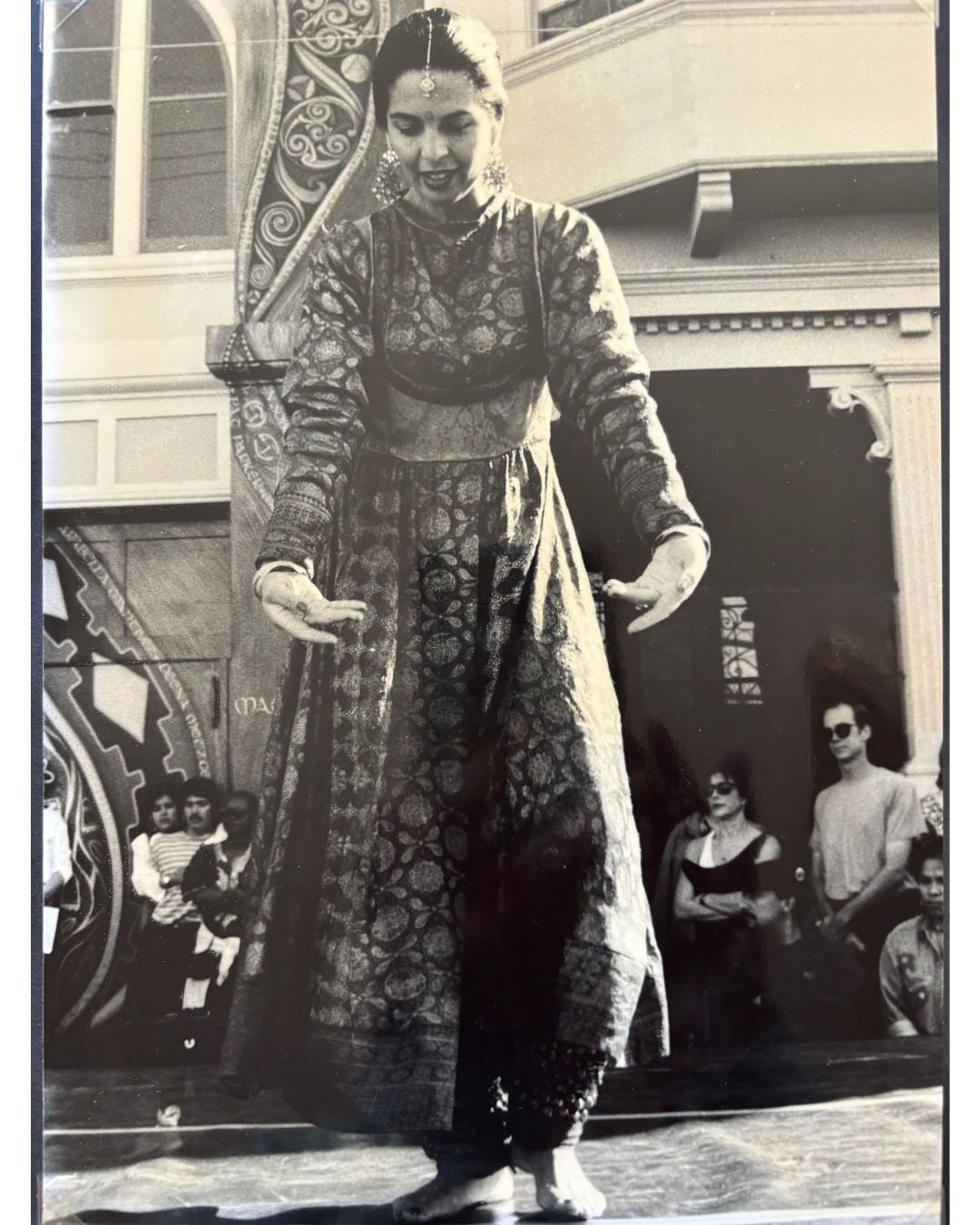
Monica Ji performing for the unveiling of the new mural at the Women’s Building in San Francisco in 1994.
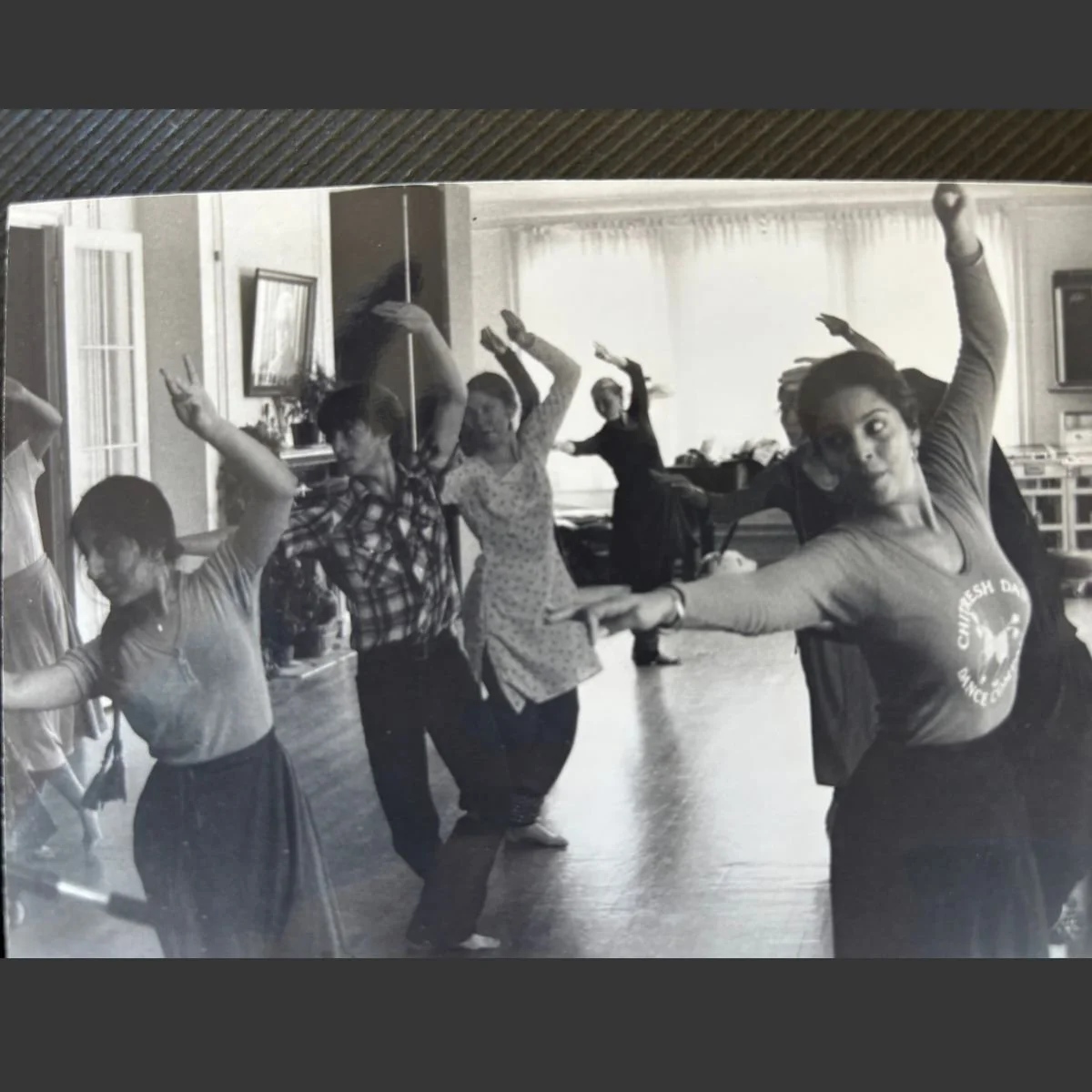
Monica ji dancing in Panditji’s class, also Amrit ji, Antonio ji, and others, as the Cultural Integration Fellowship in San Francisco, 1981
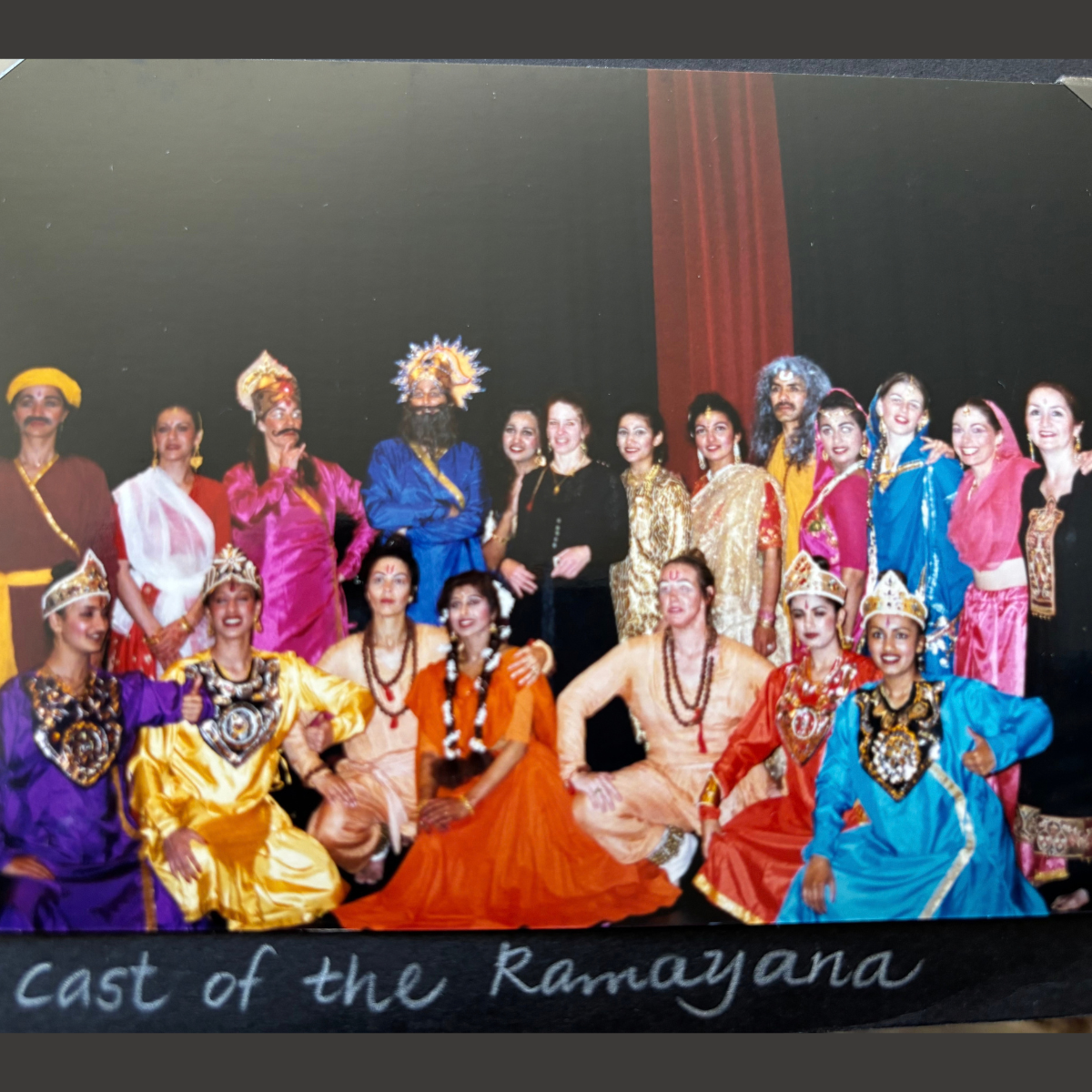
Cast of the Ramayana in 1995.
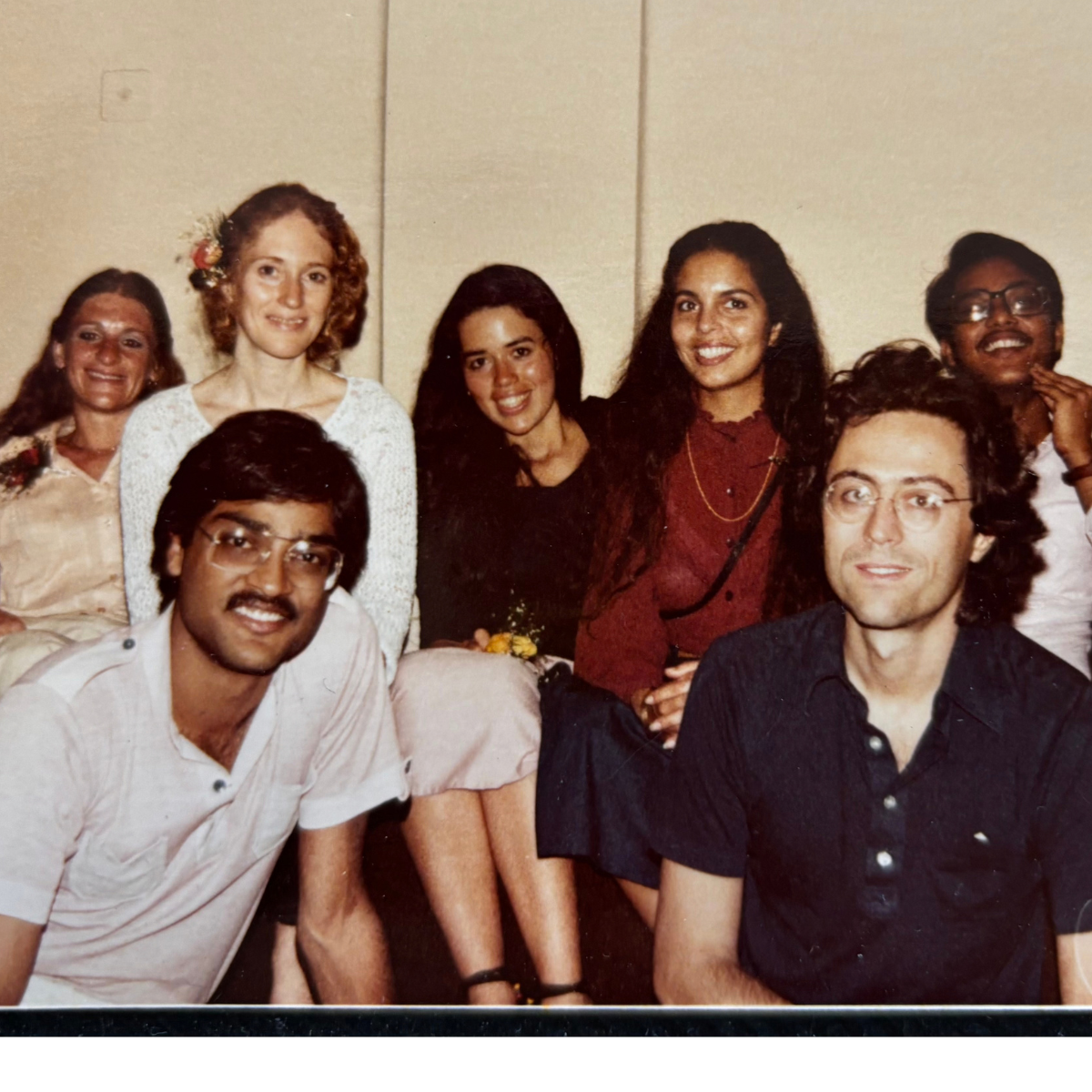
India Tour in 1981
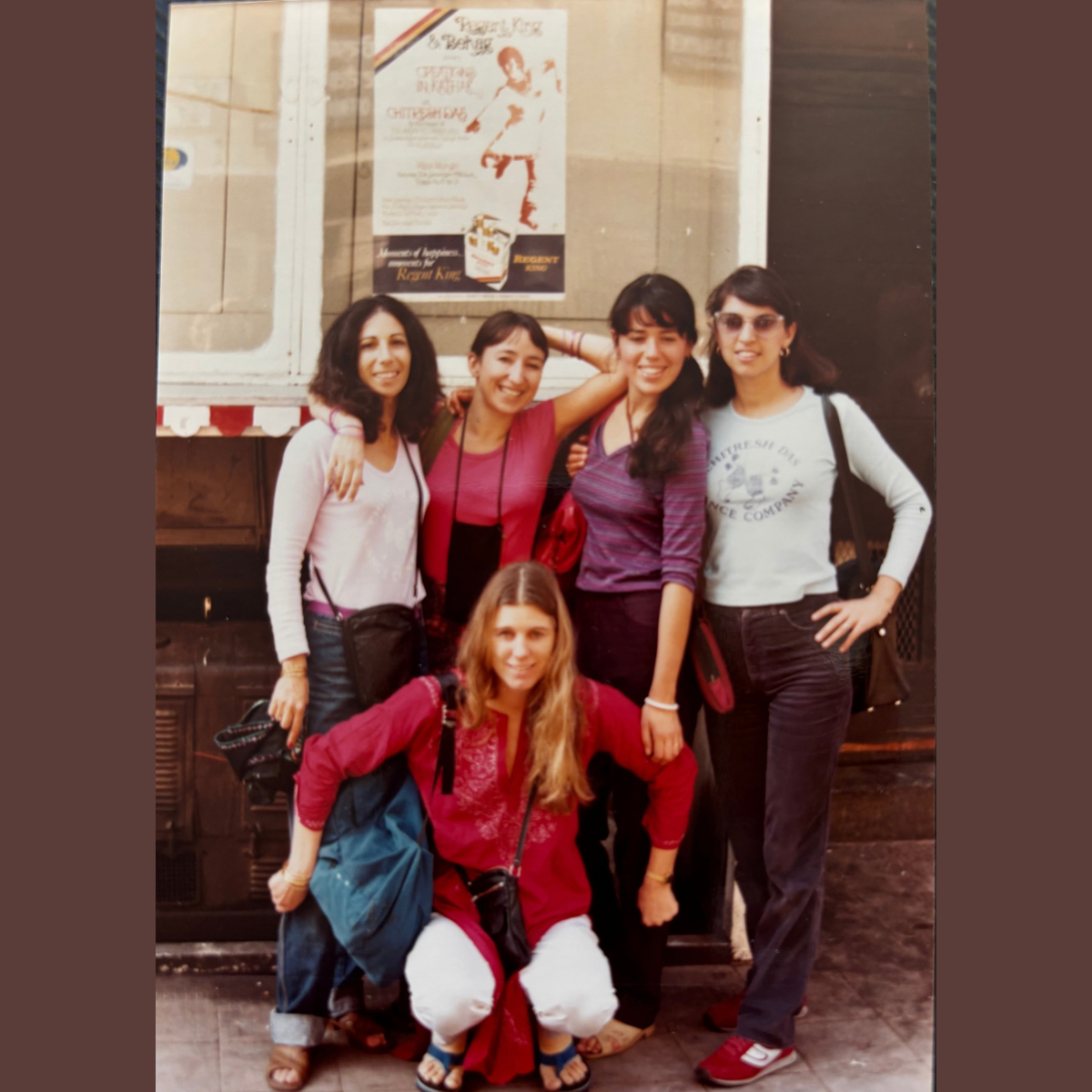
India Tour in 1981